
Badminton Warm-Up Exercises Before Training Or Playing

Badminton Warm-Up Exercises Before Training Or Playing
A good badminton warm-up should prepare your body for the movements you are about to perform on court. Badminton involves lunges, changes of direction, overhead strokes, quick acceleration and repeated recovery movements, so going straight from rest into fast rallies is rarely a good way to start.
At Dynamic Badminton Academy, we prefer a progressive warm-up that begins with easy movement before building towards badminton-specific footwork and racket actions. The goal is to feel warmer, more mobile and ready to move—not tired before the lesson or game begins.


Why Should You Warm Up Before Playing Badminton?
A badminton warm-up should gradually increase movement intensity and prepare the joints and muscles used during play. A useful sequence normally starts with light aerobic movement, continues with controlled mobility and activation, and finishes with movements that resemble badminton footwork, lunges and racket swings.
Sports-medicine guidance similarly recommends warming up before stretching or intense exercise and gradually progressing towards movements that resemble the activity being performed.


Build A Progressive Badminton Warm-Up

Start With Light Movement
We usually begin with a few minutes of easy movement rather than immediately performing fast shuttle runs or explosive jumps.
Light jogging around the court, brisk walking, gentle side steps or easy skipping can help a player transition from rest into activity. The pace should be comfortable at first and gradually increase.
You do not need to turn this part into a conditioning workout. If you are already breathing heavily before the technical session begins, the warm-up may be more intense than necessary.

Mobilise The Ankles, Knees And Hips
Badminton places considerable movement demands on the lower body. Players frequently push off, stop, lunge and change direction, so we want the ankles, knees and hips moving comfortably before faster drills begin.
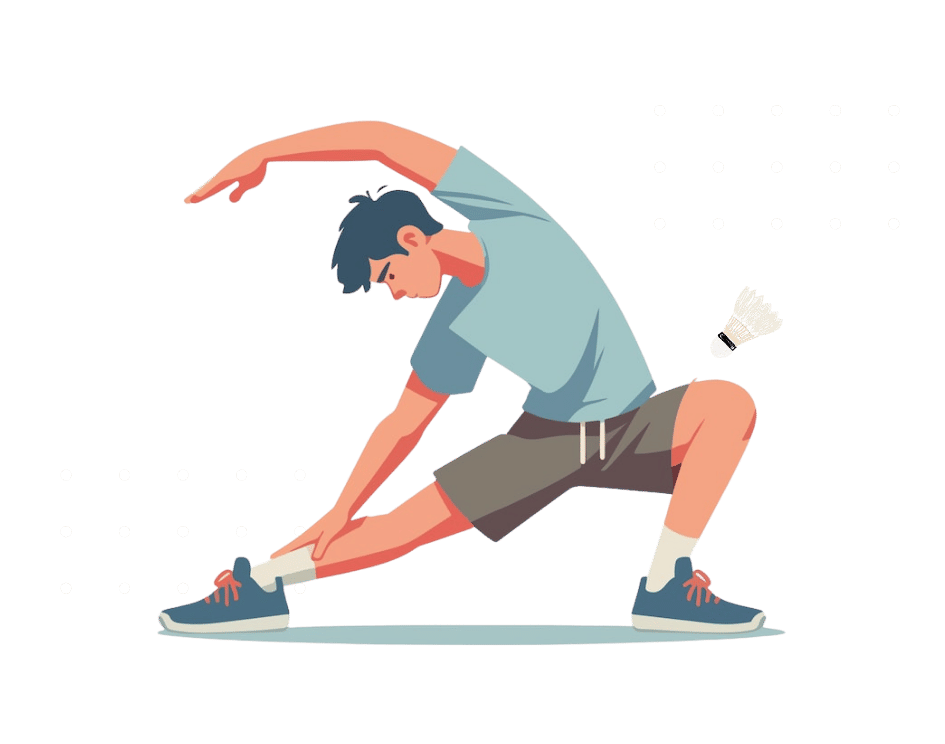
Controlled ankle circles, knee bends, hip rotations and walking lunges can be added after the initial light movement. The emphasis should be on smooth, controlled motion rather than forcing the joints through uncomfortable ranges.

Prepare The Shoulders, Arms And Wrists
Badminton also requires repeated racket movements during clears, drops, drives, serves and smashes.
We like to include controlled arm circles, shoulder rotations, elbow movements and gentle wrist movements before progressing to faster racket actions. If you are holding a racket, easy shadow swings can also be introduced at low intensity before increasing swing speed.

Use Dynamic Movements Before Fast Play

Dynamic Movements
Long static stretches are not the same thing as a complete warm-up. Current exercise guidance generally recommends first increasing body temperature with light activity and using dynamic or sport-specific movement before intense exercise.
For badminton players, controlled leg swings, walking lunges, lateral steps, arm swings and gradual court movements are often more relevant immediately before play than simply holding long stretches while the body is still cold.

Add Badminton Footwork Patterns
Once the body feels warmer, the warm-up should become more badminton-specific.
We may introduce light split-step movements, side steps, forward and backward movement, controlled lunges and easy recovery steps. The purpose is not to complete full-speed footwork training. It is to rehearse the patterns that will soon be used during drills and rallies.
Beginners can keep the movements slow and simple. More experienced players can gradually increase speed while maintaining balance and control.

Practise Shadow Badminton Movements
Shadow badminton means moving and swinging without actually hitting a shuttlecock.
This can be a useful bridge between general warming up and normal badminton training. A player might move towards different areas of the court, perform an appropriate shadow stroke and then recover towards the centre.
Badminton World Federation Shuttle Time resources also incorporate warm-up activities into structured badminton sessions before players progress to skill and game activities.

Warm Up With The Shuttlecock
The final stage can involve actual badminton actions at controlled intensity.
Instead of immediately starting with maximum-power smashes, players can begin with simple net exchanges, drives, clears or cooperative rallies. The aim is to reconnect timing, racket control and shuttle contact while the body continues preparing for faster play.


How Long Should A Badminton Warm-Up Take?
There is no single duration that suits every player or every session. A short recreational game may require less preparation than an advanced training session.
As a practical starting point, around 5 to 10 minutes of lower-intensity activity is commonly recommended before more demanding exercise, followed by mobility and badminton-specific movement according to the session ahead.
The important point is not the exact number of minutes. You should feel progressively warmer and more prepared without becoming fatigued before the main session begins.

Avoid Turning The Warm-Up Into A Workout
A warm-up should prepare you to perform, not use up the energy you need for training.
Repeated maximum jumps, long shuttle runs or hard conditioning before technical practice can leave a player tired before the lesson begins. We prefer to build intensity progressively and save demanding physical work for the appropriate part of the training programme.


Warm Up According To Your Training Level
A beginner, a child and a competitive player do not necessarily need the same warm-up.
Young players may benefit from simple movement games, coordination exercises and easy racket activities. Beginners may spend more time rehearsing basic footwork patterns, while experienced players may incorporate faster multidirectional movement and more specific stroke preparation.
At Dynamic Badminton Academy, we adjust warm-up activities according to the player’s age, ability and the type of training planned for that session.
Beginners who are still developing their fundamental movement and racket skills can also read our Learning Badminton guide.

Prepare Properly Before Your Next Badminton Session
A badminton warm-up does not need to be complicated. Start with light movement, mobilise the major joints, prepare the shoulders and wrists, introduce controlled badminton footwork and finish with gradual racket and shuttle movements.
The key is progression. Moving from low intensity towards the actual demands of badminton can help you feel more prepared for technical drills, rallies and match play.
If you want to develop your movement, technique and badminton fundamentals through structured coaching, explore our Badminton Lesson Programmes or speak with Dynamic Badminton Academy about a suitable training arrangement in Singapore.


Frequently Asked Questions
How Long Should I Warm Up Before Playing Badminton?
Around 5 to 10 minutes of light activity is a useful starting point before progressing into badminton-specific movement. The total warm-up can vary depending on your age, playing level, session intensity and how physically prepared you already feel.
Should I Stretch Before Playing Badminton?
You should avoid treating static stretching alone as your entire warm-up. Start with light movement first, then use controlled mobility and badminton-specific movements. Longer flexibility work can be performed when your muscles are already warm.
What Is A Good Badminton Warm-Up For Beginners?
Beginners can start with light jogging, simple joint movements, controlled lunges, basic footwork and easy shadow swings before hitting shuttlecocks. The movements should remain manageable while gradually preparing the body for normal badminton training.
Do Kids Need To Warm Up Before Badminton Lessons?
Yes. Kids should also prepare gradually before faster badminton activities. Their warm-up can include age-appropriate movement games, coordination exercises, simple footwork and easy racket activities rather than using exactly the same routine as experienced adult players.

Our Gallery
See our students, coaches, badminton lessons and training sessions in action.


